How Better Customer Management Can Improve the Travel Booking Experience
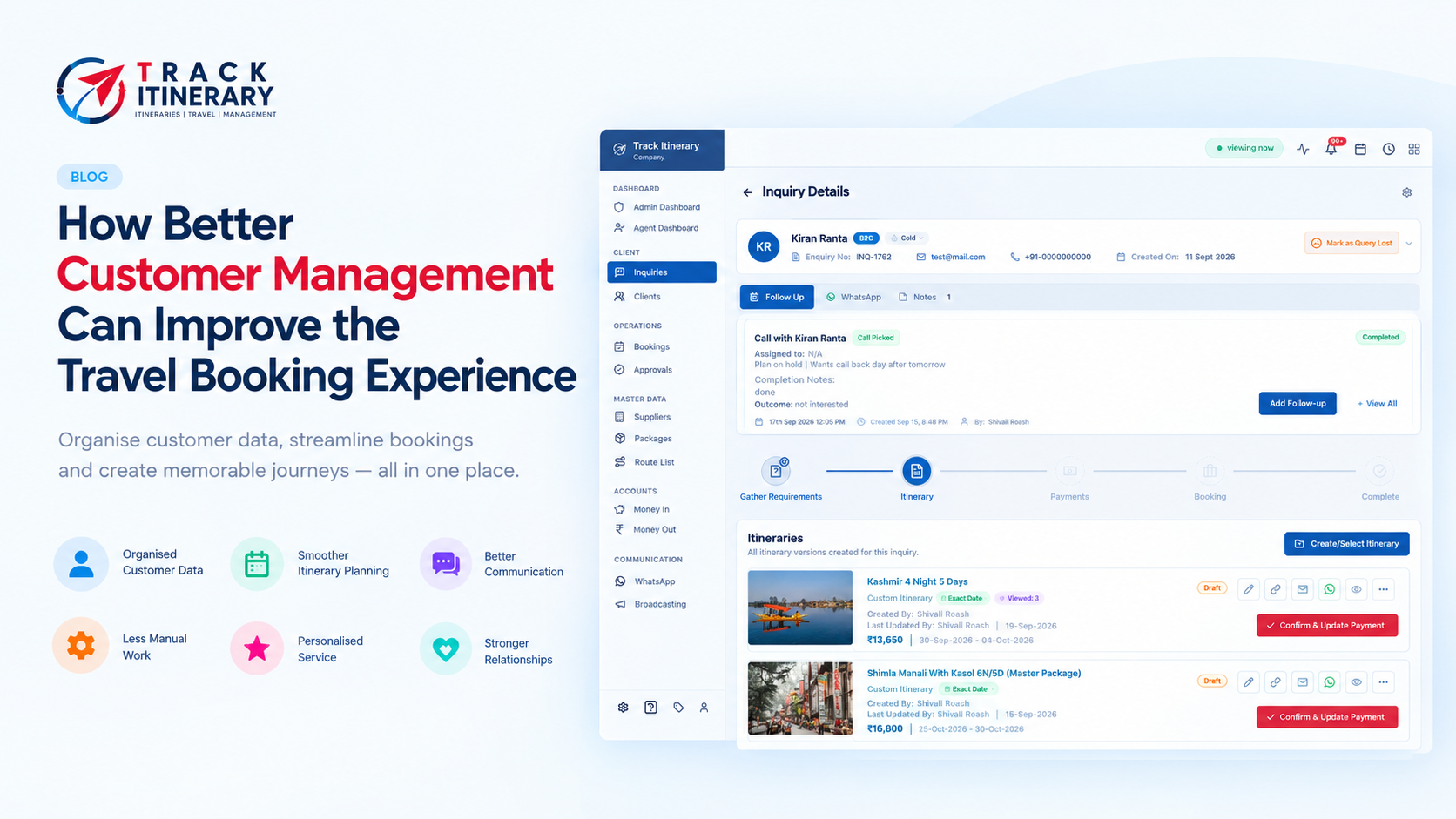
Booking a holiday is an exhilarating experience for travellers, but it can get pretty complicated behind the scenes when it comes to handling all the processes related to it. Right from the point when there is an enquiry till the planning of the itinerary, billing, and post-tourism contact, travel businesses have to deal with a continuous influx of customer data.
This is exactly when you need travel booking and customer management software to keep everything organised. With solutions like Track Itinerary software, travel agencies can organise customer details, manage itineraries, and make things easier for both travellers and agency staff.
1. Keep Customer Information Organised in One Place
Booking is not just about having the name and contact details of the traveller. Rather, it entails taking care of the travel dates, the destinations to be covered, the preferences, bookings, payment, and other related things.
It is hard to access this information when all of it is scattered in spreadsheets, e-mails, and various applications. A travel management software system makes it easier to organise and collate important details about customers and their travels.
By having a centralised system, travel teams can:
- Gain access to customer information.
- Be less reliant on spreadsheets and emails.
- Maintain a systematic arrangement of itinerary-based information.
- Limit mistakes that occur because of manual searches for information.
It results in an organised framework to control every customer experience.
2. Create a Smoother Itinerary Planning Experience
An itinerary plays a very critical role in travel bookings. The customer wants to know where he or she is travelling and how the trip is going to unfold.
Itinerary management software enables travel professionals to organise the information regarding a particular journey in an understandable way. Teams no longer need to continuously compile information; rather, they can use an organised system for making itineraries.
A good itinerary must contain:
- Day-wise travel plans.
- Information about accommodation and transport.
- Details regarding activities and sightseeing.
- Travel points/notes to keep in mind for travelling.
- Relevant details for booking.
A clearer itinerary would result in fewer customer queries on basic details related to the journey.
3. Improve Communication at Every Stage
Effective customer management does not conclude once a booking has been confirmed. Travellers require updates both prior to and during their trips. Any delay or lack of information can lead to frustration.
A travel agency management software solution can help employees make sure that any customer communication is related to the right booking or itinerary. In this way, travel industry workers can respond more effectively without having to search through several conversations.
For instance, teams can better communicate about:
- Any itinerary changes.
- Booking confirmations.
- Payment requirements or documents.
- Time-to-time travel updates.
- Special requests from the customers.
When communication is timely and appropriate, the customers feel more informed and assisted during the process.
4. Reduce Manual Work for Travel Teams
Customer experience is sometimes related to efficient processes. The more time travel agents spend inputting the same data again and again, the less time they have for their clients.
A travel booking management software minimises repetitive administrative tasks, as booking and itinerary processes could be included in a workflow.
This could benefit travel businesses in the following ways:
- Saving time spent on booking management.
- Reducing the number of unnecessary mistakes during data entry.
- Improving collaboration between staff members.
- Spending more time working with customers' demands.
It is not only about automation of tasks but also simplification of travel processes.
5. Make Personalised Customer Service Easier
Travellers like it when travel companies know what they want rather than making all reservations the same way. For instance, a client who often reserves family vacations may need something quite different from a client who reserves for business trips.
Organised customer data via customer management software for travel agencies can help facilitate meaningful conversations. This is because teams get more clarity regarding the past transactions and dealings of the customers. This further supports more relevant services and conversations.
Personalisation could involve:
- Memorising customers' favourite destination/choice of accommodation.
- Recognising one's regular travel needs.
- Recommending appropriate travel services to customers.
- Follow-up actions based on prior inquiries.
Even little things can make the interactions seem more thoughtful yet professional.
6. Build Better Customer Relationships After Booking
A travel experience is not finished once the itinerary is delivered to your customer. Post-booking communications could also affect customer loyalty to the travel company.
With the Track Itinerary application, travel businesses have an opportunity to become more organised when handling customer and tour information during the booking lifecycle. This creates more opportunities for them to do timely follow-ups and develop strong and long-term customer relationships.
In regard to the travel industry, improved customer management would result in the following benefits:
- Superior customer service.
- Quick availability of booking data.
- Improved coordination.
- Greater booking efficiency.
- Superior customer relationships.
Turn Better Management into a Better Travel Experience
An unforgettable travel experience begins from the moment one starts making reservations. Everything from the time one makes the first query until the moment that booking is confirmed contributes to the client's experience.
Through travel itinerary software such as Track Itinerary, travel organisations will be able to organise everything about their clients and the trips, and communication will become easier.