7 Signs Your Travel Agency Needs a Better Way to Manage Its Daily Operations
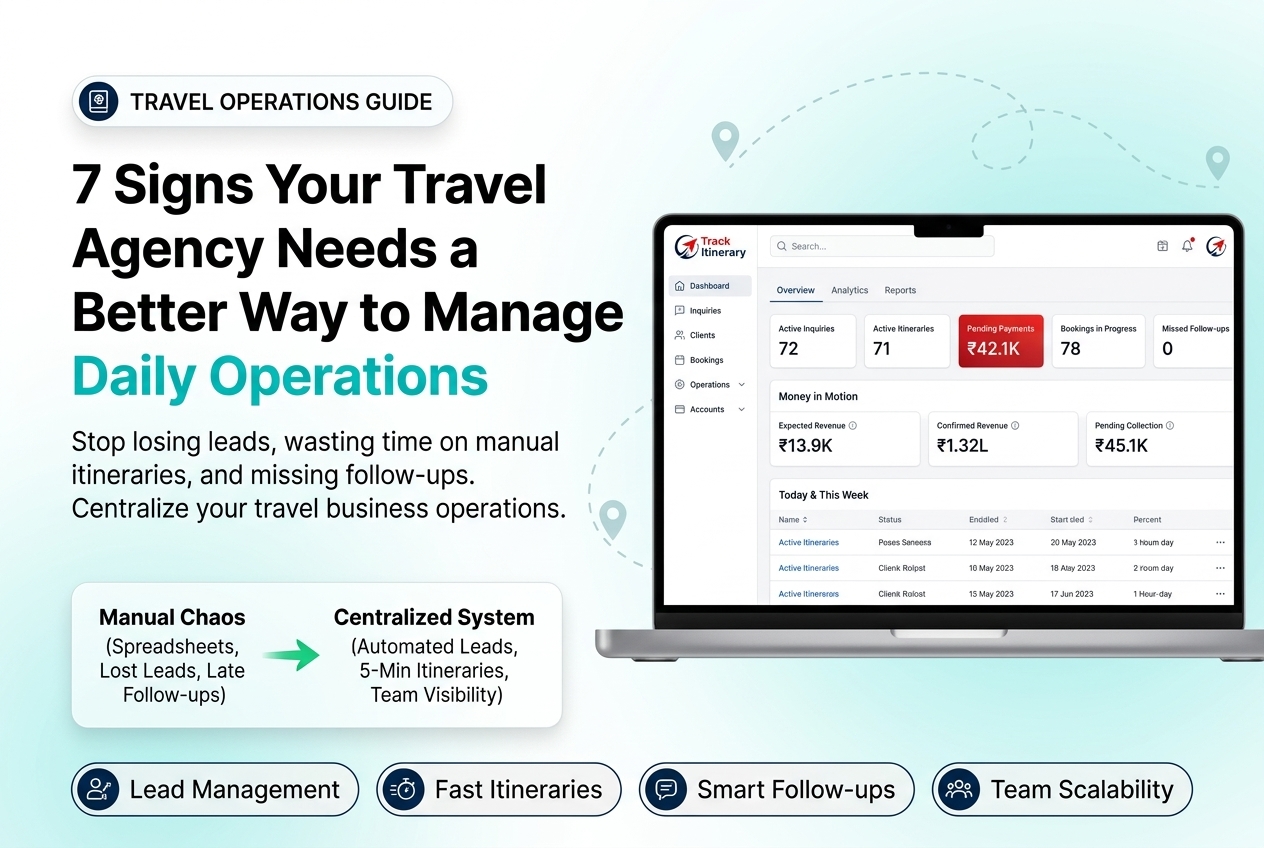
Operating a travel business involves much more than arranging flight tickets and hotel rooms. From receiving inquiries and creating schedules to following up with clients and managing suppliers, there are many things you need to handle daily.
When your travel agency is growing, you will find it hard to keep track of things using Excel sheets, sending out random messages, and emails. This could mean that it's time to reassess your workflow process.
Here are seven indications that you could use some streamlining at your travel agency for a more efficient and organised system:
1. Your Leads Are Getting Lost or Forgotten
A new enquiry marks the start of every possible booking process. But with leads coming in from various sources like WhatsApp, calls, email, social media and the website itself, it is difficult to remember every prospect.
Some enquiries might go unanswered while some will be forgotten even after being replied to once. Using travel agency management software can help you centralise your leads and make it easier for your staff to follow up on where each lead stands.
Look out for:
- Lack of follow-ups to leads.
- Customer data scattered in various portals.
- Hard to tell who is working on a certain query.
- Unmet business opportunities owing to late responses.
2. Creating Itineraries Takes Too Much Time
An itinerary that is properly planned could create a lasting impression for your client, but preparing all the schedules manually could take up your precious time, especially when you have many requests coming to your travel agency on a daily basis.
Copying hotels, entering descriptions, regular adjustments, and formatting the document could be quite time-consuming. Travel itinerary management software allows agencies to reduce the hassle of document formatting while concentrating on the customers.
A better itinerary workflow can help you:
- Use structured templates to create itineraries.
- Organise day-by-day travel plans.
- Save time during updating.
- Get professional-looking trip details.
- Communicate itineraries to your customers swiftly.
3. Your Team Is Spending Too Much Time on Repetitive Tasks
Entering data manually, tracking lead status, reminding yourself about follow-ups, and storing customer information may end up consuming a large chunk of your employees' time. All these activities might seem trivial individually, but taken together, they could decrease productivity.
A travel agency CRM software helps consolidate customer and lead data within a well-organised system, allowing you to save time looking up data and concentrate on turning inquiries into bookings.
It does not aim to take away the personal touch of travel planning. It only helps reduce time wastage on administrative tasks and allow your team to concentrate on what matters.
4. Following Up with Customers Has Become Difficult
Customers take time before confirming their trip. The customers can compare different packages and also discuss their plans with family as well before making a payment. That's why consistent follow-up becomes essential.
However, once the workspace starts overflowing with notes from notebooks, spilled chats, or personal calendars, the follow-ups may easily get ignored.
This calls for a more efficient way to help your team prioritize the pending inquiries and follow-ups, making sure that the prospects do not fall out of your sales funnel.
5. Your Sales Team Doesn't Have a Clear View of Leads
While an agency is expanding, having knowledge about the number of enquiries received becomes insufficient, as you have to know what is happening with these enquiries.
For instance:
- How many leads are new?
- What is the number of requests that are pursued?
- How many quotes have been sent out?
- Which leads are expected to turn into customers?
- How many bookings have been made?
An advanced tour operator management software can assist in organizing these processes and giving your staff better insight into the company's sales performance.
This will be especially useful in finding bottlenecks and understanding where more focus is needed.
6. Customer Information Is Scattered Everywhere
When client information exists saved in multiple spreadsheets, WhatsApp messages, emails, and even manuals on paper, obtaining information might be more difficult than required.
Your staff might waste several minutes looking for past conversations, preferences for travel, routes, or any other relevant details.
A centralized system allows access to these document conversations. This is especially valuable when many members of the team are handling a single inquiry, or when you meet a returning client at your travel agency again.
7. Your Agency Is Growing, but Your Processes Aren't
Growth is a good thing, but it can also highlight problems in existing systems. A process that goes off without a hitch with 20 queries per month may find itself struggling with hundreds more.
If increasing the number of clients means increasing the number of spreadsheets and the amount of manual work, then perhaps you need to reconsider the scalability of your system.
Here is where travel agency automation software can help. Automating some of the key processes in your business will ensure that you are able to handle more work without complicating things too much.
The Right Technology Can Make Daily Operations Easier
Running a travel agency involves countless tasks and can easily lead to inefficiency without proper processes. If you find yourself routinely in search of the right data, trying to remember the right follow-ups, making itineraries by hand, or tiring around tasks all day, it is likely your process needs to get some improvement.
Track Itinerary is the all-in-one platform designed to unify all the important processes in the work of a travel agency into one place for easier management of leads, follow-ups, itineraries, and customer interaction.
If any of these seven signs sound familiar to you, then maybe it's time to consider a more efficient solution.